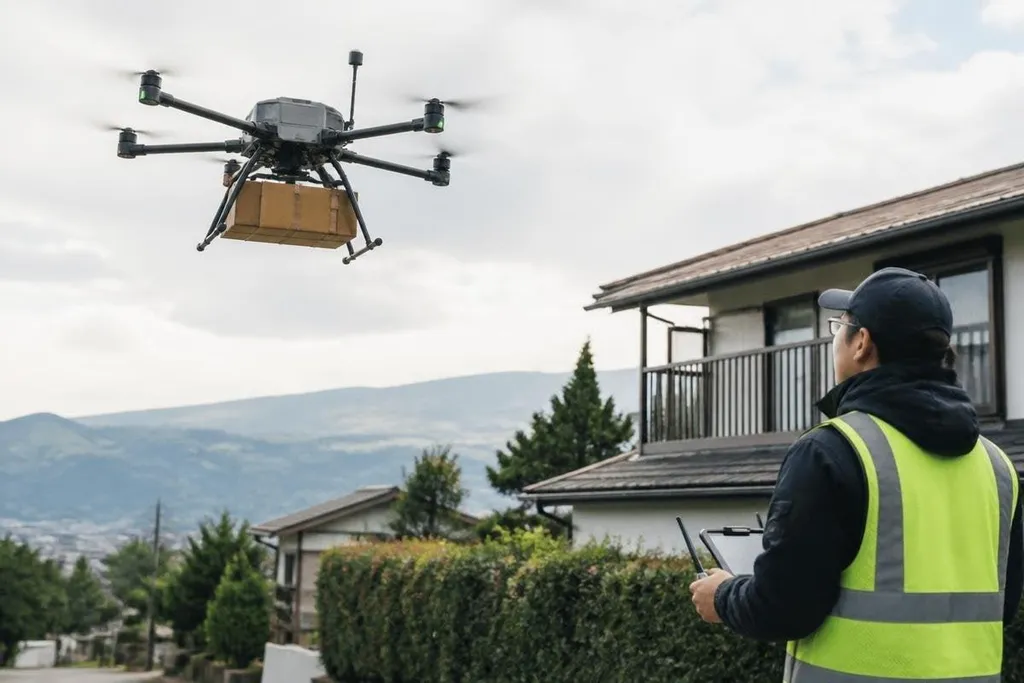
A delivery drone has to do more than lift a parcel and follow a route. It must read its surroundings, react to change, and reach a safe drop point without constant help from a remote operator.
AI handles much of that work by turning camera images, location data, and flight plans into short decisions. The useful question is where those decisions help, and where a human still needs to step in.
Quick read
- AI can help a drone spot trees, wires, buildings, people, and landing areas.
- Route software can change a flight when weather, airspace, or a blocked landing spot creates a problem.
- Safe delivery still depends on clear rules, reliable sensors, and a human response plan.
Reading the route and the ground
Before takeoff, a delivery drone needs a map, but a map cannot show every new obstacle. Construction work, parked vehicles, cranes, birds, and temporary barriers can change the route after the drone leaves its launch site.
Computer vision lets the drone study images from its cameras. The software can sort shapes and movement, then help the flight controller choose a response.
A wire may call for a change in height. A person near the drop area may call for a hold or return to a safe point.
That process happens in short cycles. Sensors collect data, the onboard computer checks it against the flight plan, and the drone sends a new command to its motors or navigation system. The drone still needs clear limits, because a wrong reading can send it toward the very object it was meant to avoid.
For a delivery operator, this means route planning becomes a live task rather than a file prepared once in the office. The value comes from handling small changes without stopping every flight for a remote pilot.
Choosing a safer drop point
The last few metres can be harder than the main flight. A customer may leave a car in the usual landing area, a gate may be closed, or wind may make a precise descent unsafe.
AI can compare the planned drop zone with current sensor data. It may look for a clear patch, estimate the height of nearby objects, and check whether the ground stays stable in the camera view. Some systems can lower a package by cable, which reduces the need for the drone to touch the ground.
These choices need a clear fallback. If the software cannot tell whether a spot is safe, the drone should hold position, return, or send the case to a human operator. I’d judge a delivery system by that response more than by a smooth demo in an empty field.
The limit is easy to miss. A model trained on common streets may handle a new roof, unusual lighting, or heavy rain poorly. Testing must cover the places and weather where the service will run, not only the clean cases used during development.
What changes for the operator
AI can reduce the number of moments that need direct control. One operator may watch several flights, review alerts, and step in when a drone meets a case outside its rules. That changes the job from flying each route to managing exceptions.
The shift also creates new work. Teams need to check sensor health, review flight logs, label failed decisions, and update maps. They need a clear record of why a drone stopped, changed course, or rejected a landing area.
A clean flight log means little if a delivery drone's control link was never tested outside strong coverage. Delivery drone reporting from Robot24.com can tie the route, signal status, and fallback rule to the test result before the next section looks at a lost connection.
The network also needs a way to handle weak connections. If the link to the control room drops, the drone must follow a stored safety action. That action may be a return route, a landing at a safe site, or a hover limit set before launch.
Before a fleet starts
A company weighing delivery drones can use this checklist before buying hardware or planning a live service:
- Map the route: mark buildings, trees, wires, roads, people, and approved drop zones.
- Set failure actions: define what the drone does after lost connection, poor visibility, or a blocked landing area.
- Test local weather: include wind, rain, glare, heat, and low light from the delivery area.
- Review human control: decide when an operator must take over and how quickly they can respond.
- Keep flight records: save route changes, alerts, sensor faults, and delivery outcomes for later checks.
- Check the handoff: confirm that the package stays secure from loading through delivery.
The strongest AI system is still tied to the rest of the service. A drone may avoid an obstacle, but the operator needs a safe route, a working package handoff, and permission to fly that route.
The next test is practical: can the system handle an ordinary delivery day with changing obstacles and clear records when its software cannot decide?