
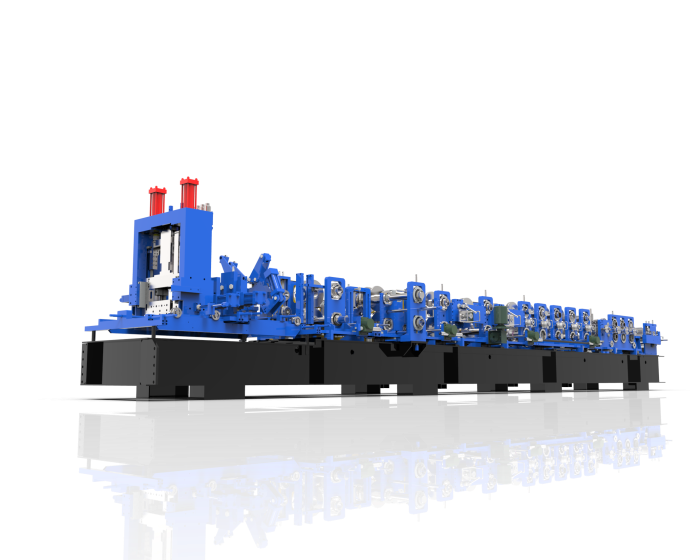
In modern construction and industrial production, consistency in steel component manufacturing plays a vital role in ensuring structural reliability, safety, and long-term performance. As projects become more complex and demand higher precision, manufacturers must focus on producing steel components that meet strict quality and dimensional standards.
Technologies such as the cz purlin machine and cz purlin roll forming machine have significantly improved the ability to produce consistent steel sections at high speed. These machines help manufacturers maintain uniformity in production while meeting the increasing demands of the construction industry.
Consistency is not only important for product quality but also for reducing waste, improving efficiency, and ensuring smooth installation at construction sites.
The Importance of Consistency in Steel Manufacturing
Steel components are widely used in structural frameworks, roofing systems, and industrial buildings. Even minor variations in size, shape, or strength can lead to installation issues and long-term structural problems.
In large-scale projects, inconsistent components can cause delays, increase labor costs, and reduce overall project efficiency. That is why manufacturers focus heavily on maintaining stable production processes using advanced machinery.
A cz purlin machine helps ensure that every produced purlin meets exact specifications, reducing errors and improving construction reliability.
Benefits of Consistent Steel Component Production
Improved Structural Reliability
Consistent steel components ensure that buildings and structures maintain uniform strength and stability across all sections.
Reduced Material Waste
Accurate production minimizes errors and reduces scrap material, making manufacturing more cost-efficient.
Faster Installation Process
When components are uniform, installation becomes quicker and more efficient at construction sites.
Better Production Efficiency
A cz purlin roll forming machine enables continuous and stable production, reducing interruptions and improving output quality.
Lower Project Costs
Consistency helps avoid rework, replacement, and delays, which reduces overall project expenses.
Steel components produced with high consistency are commonly used in:
- Industrial buildings
- Commercial construction
- Roofing systems
- Warehouse structures
- Steel framing systems
- Infrastructure projects
This wide range of applications highlights the importance of precision in manufacturing processes.
Achieving Consistency with Modern Manufacturing Equipment
Modern steel production relies heavily on automated and semi-automated systems to maintain accuracy. A cz purlin machine plays a key role in ensuring uniform profile production, while a cz purlin roll forming machine supports continuous shaping with minimal variation.
These machines are designed to reduce human error and improve production stability. By maintaining proper calibration and regular maintenance, manufacturers can achieve consistent output across large production batches.
Choosing the Right Manufacturing Solution
When selecting equipment for steel component production, manufacturers should consider accuracy, production speed, durability, and ease of operation. A well-designed system should support long-term consistency while reducing operational risks.
Investing in a reliable cz purlin machine or cz purlin roll forming machine helps manufacturers maintain product quality and meet industry standards more effectively.
Conclusion
Consistency is a key factor in the success of steel component manufacturing. It ensures structural reliability, reduces waste, improves efficiency, and supports smooth construction processes.
With advanced equipment like the cz purlin machine and cz purlin roll forming machine, manufacturers can achieve high levels of precision and stability in production. As demand for high-quality steel components continues to grow, consistency will remain a critical factor in maintaining competitiveness and industry standards.